How to Make a Small Bedroom Feel Twice Its Size
Small bedroom ideas that actually make a room feel twice its size: sight lines, scale, and light behaving itself.

Julia Reyes
June 5, 2026 · 5 min · Spring
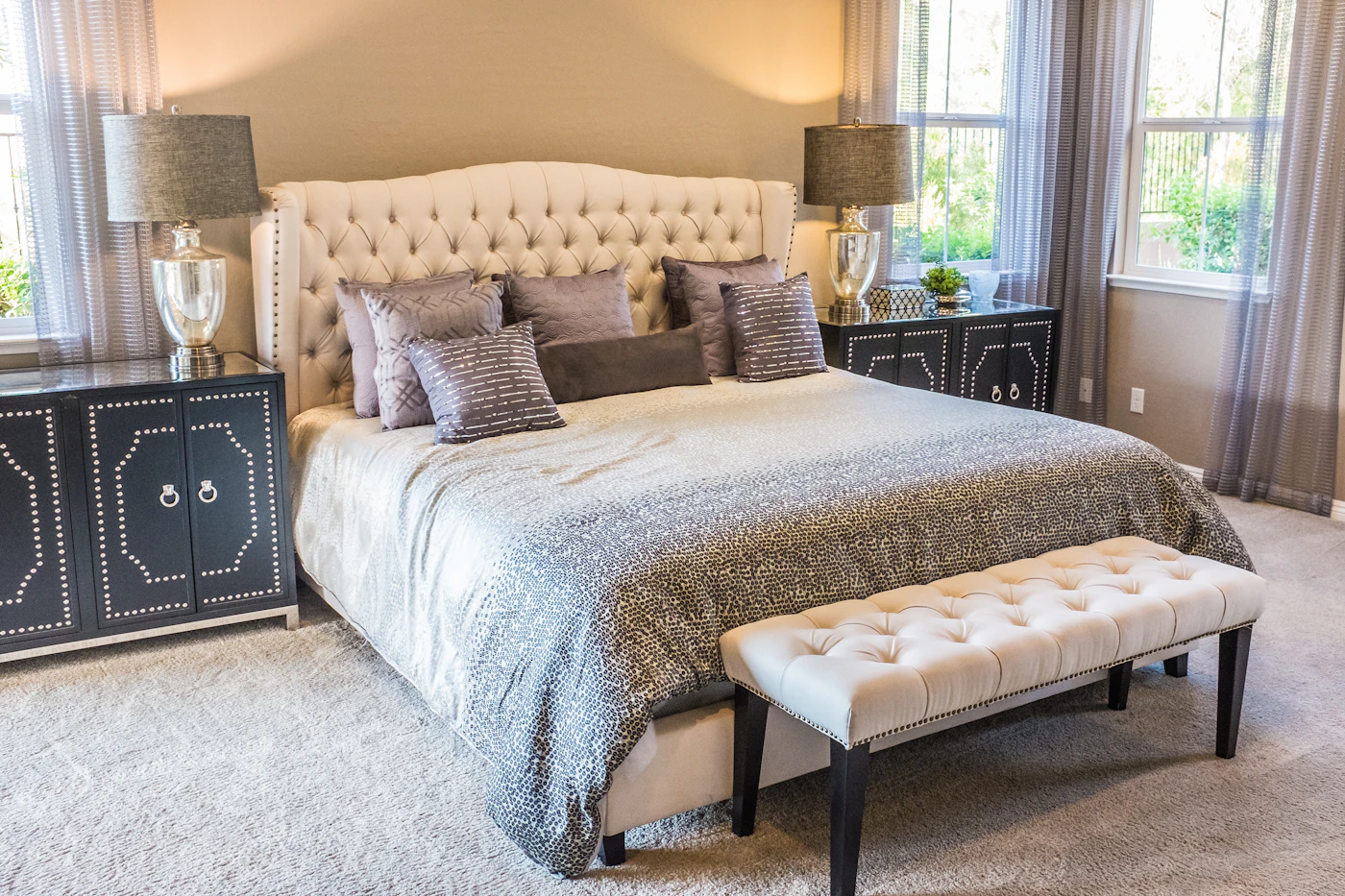
A small bedroom is not a problem to solve with a smaller bed. It is a composition problem, and composition has rules. Here are the rules for making a small bedroom feel bigger, in order of impact.
Lower the furniture, widen the room
The eye measures a room by the furniture against the walls. Tall, bulky pieces read as walls themselves, shrinking the space around them. Low pieces leave the upper half of the room visually open, which reads as space even when there is none.
Start with the bed. A platform bed with a low profile, or a bed frame that sits six inches off the floor, drops the visual center of the whole room. Add a low dresser or a floating shelf instead of a tall armoire, and the room grows a head taller without moving a wall.
One oversized mirror, not several small ones
A single large mirror reflects the room back at itself, which is the oldest space trick in the book. The mistake is buying three small mirrors to cover more wall. That chops the reflection into pieces and reads as clutter.
Place one large mirror opposite the window, not next to it. Facing the window doubles the daylight instead of bouncing it back outside. A leaning floor mirror, full length, does the job and costs less than a wall installation.
Light in layers, but keep it low
Overhead light is a small room’s worst friend. A single ceiling fixture flattens the space and makes the ceiling feel like a lid. Replace it with three or four low sources: a table lamp at bedside, a floor lamp in the corner, a small sconce above the dresser.
Light at eye level and below makes the walls recede. It is the same effect theaters use, and it costs less than any renovation.
A small room is not a smaller room to decorate. It is a larger room to compose.
Choose the bed linens like a designer
White and near-white bedding is not a cliché. It is the highest-value purchase in a small bedroom. Light fabric reflects what little light exists, and a monochrome bed reads as one calm object instead of a pile of patterns.
If you want color, put it on the pillows and the throw at the foot of the bed. That way the palette is changeable for $30 instead of permanent for $300.
The nightstand trick
In a tight room, the nightstand is where square footage goes to die. Two small floating shelves, one on each side of the bed at pillow height, hold a lamp, a book, and a glass of water with none of the floor footprint. The open space underneath reads as room.
Reduce the palette to one quiet base
Small spaces do not handle more than one strong accent. Pick a base color for walls and large furniture, keep the floor neutral, and let one accent color appear in small doses: the throw, the art, the planter. This is the difference between a small room that feels curated and one that feels busy.
The ceiling is a surface, use it
A room that is short on floor space still has a ceiling. Use the top foot of wall with a row of slim floating shelves for books and folded items. It clears the floor, draws the eye up, and a small bedroom with clean floor space always looks bigger than its square footage.
If you are working in a studio rather than a bedroom, most of these rules transfer directly. The low-profile principle especially: the bed is the biggest object in any small home, and getting it low is the fastest way to make everything else feel light.
If you live in an open-plan space, our guide on how to zone a studio apartment without building walls extends these layout principles. For shadowy corners, see renter-friendly lighting ideas without an electrician, and for non-damaging fixes, see reversible renter-friendly upgrades.